ISPS-US Psychosocial Approaches to Negative Symptoms in Psychosis Series 2026
Winter-Spring 2026 Webinar Series from ISPS-US
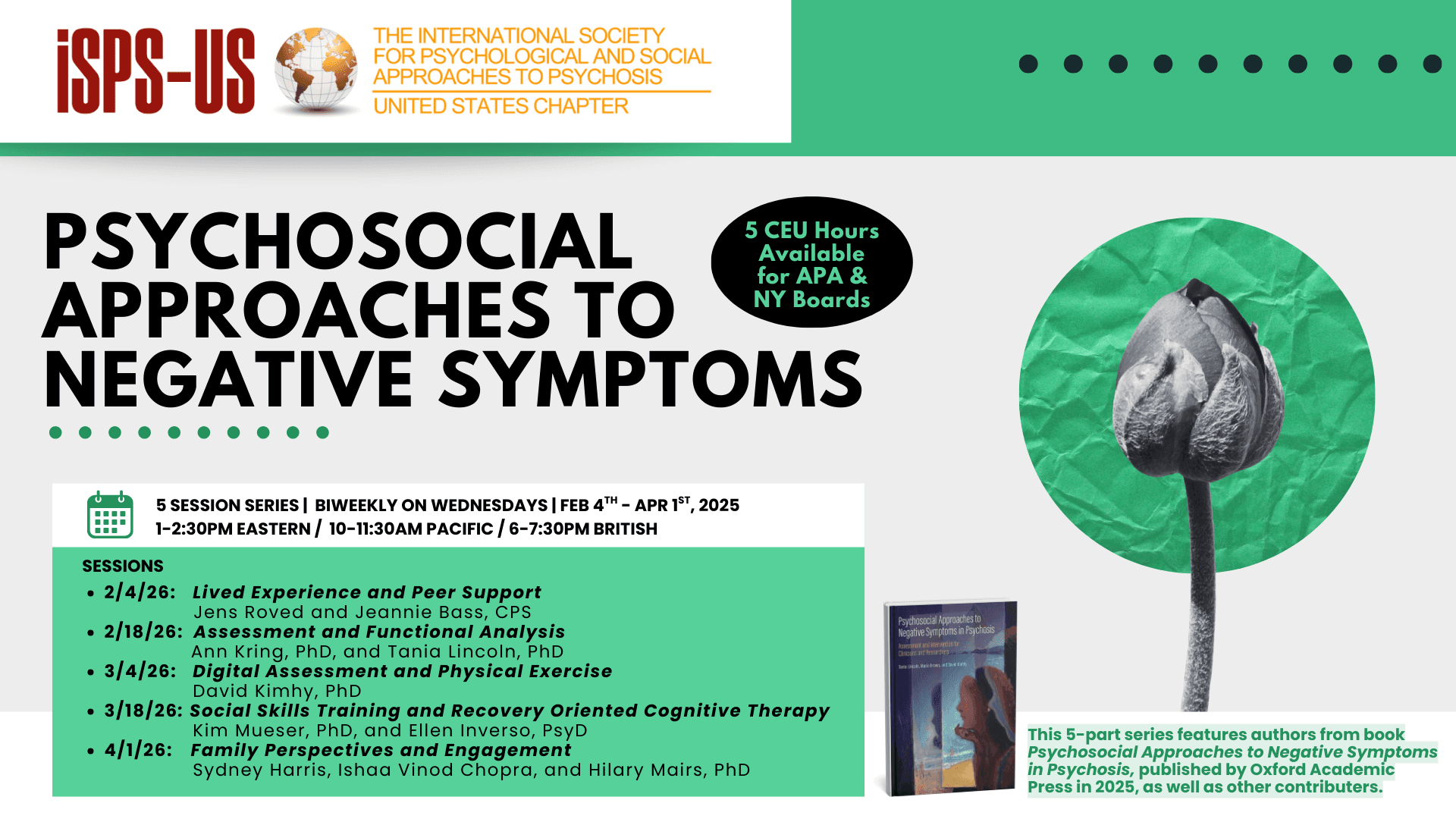
This 5-part series, taking place every bi-weekly on Wednesdays, starting February 4th, 2026 from 1pm-2:30pm Eastern, brings together leading researchers, clinicians, and people with lived experience to explore human-centered, recovery-oriented, and meaning-based approaches to negative symptoms.
Series Description
Experiences termed “negative symptoms” in psychosis, such as social withdrawal, reduced motivation, or blunted affect, are often described in psychiatry as some of the most disabling and difficult-to-treat symptoms. Yet these ways of naming and interpreting these experiences have also been critiqued for being pathologizing and disconnected from social context.
This webinar series, based on the book Psychosocial Approaches to Negative Symptoms in Psychosis, brings together chapter authors and other contributors to explore expansive, multidisciplinary responses to these experiences. Presenters will highlight diverse non-pharmacological approaches, including recovery-oriented cognitive therapy, social skills training, exercise interventions, functional analysis, digital assessment strategies, and more. The series will also incorporate lived experience and critical perspectives, inviting us to rethink what is meant by “negative symptoms” and to consider alternative framings rooted in recovery and meaning-making.
Designed for service providers, people with lived experience, families, and more, this series aims to expand the conversation beyond labels and toward more human-centered ways of supporting those navigating these challenges.
- Can't attend live? Don't worry, sessions will be recorded and sent to all registrants.
- CEs will be offered for APA and NY Boards (Social Work, Licensed Mental Health Counselors, Psychoanalysts, Psychology, Marriage and Family Therapy, and Creative Arts Therapy.) You’ll be able to attend the live webinar, and within 2 weeks of the event, we’ll send you a follow-up email with a link to the recorded session, along with a short quiz. CEs are awarded only after you complete the quiz; live attendance alone does not qualify.
- Can't afford to contribute? A limited number of free tickets are available to those in need. Please visit individual session event pages for details.
The series is open to all, including psychologists, social workers, therapists, occupational therapists, peer specialists, individuals with lived experience, and family members.
Full Series Registration (with Course Discount)
THIS SERIES BEGAN ON 2/4/26. REGISTERING FOR THE FULL SERIES NOW WILL GIVE YOU ACCESS TO THE REMAINING UPCOMING LIVE SESSIONS AND RECORDINGS OF THOSE THAT HAVE PASSED.
Individual Session Registration (click session name)
Click on the link for individual sessions. Sessions that have yet to take place will take you to the registration page. Sessions that have passed will take you to the link to the recordings.
- February 4, 2026 1pm-2:30pm Eastern – Session 1 "Lived Experience and Peer Support" with Jens Tódor Roved and Jeannie Bass, CPS
- February 18, 2026 1pm-2:30pm Eastern – Session 2 "Assessment and Functional Analysis" with Ann Kring, PhD, and Tania Lincoln, PhD
- March 4, 2026 1pm-2:30pm – Session 3: "Digital Assessment and Physical Exercise" with David Kimhy, PhD
- March 18, 2026 1pm-2:30m – Session 4: "Social Skills Training and Recovery Oriented Cognitive Therapy" with Kim Mueser, PhD, and Ellen Inverso, PsyD
- April 1, 2026 1pm-2:30pm – Session 5: "Family Perspectives and Engagement" with Sydney Harris, Ishaa Vinod Chopra, and Hilary Mairs, PhD
Session Details
-
Part 1 : Jens Tódor Roved - Lived Experience and Meaning
This talk includes an in-person narrative about childhood sexual abuse, how it resulted in detachment from the world and made the repression of the conscious Self possible, unaware of the underlying trauma for 30+ years. It tells a story of self-hatred, self-pity, and self-fulfilling prophecies that voices had pronounced.What might be diagnosed as negative symptoms was seeking comfort in isolation, surviving isolation. The continuous need to seek refuge. Struggling with everyday life, chores, education, finding a partner, and making decisions while in constant dialogue with voices. Dealing with the aftermath.
So, what happened to make the breakthrough? Choosing life means sharing the trauma. Meeting the right people at the right time and them reaching out. The ability to make life choices, find occupational balance, and engage in meaningful activities such as sport. Moreover, realizing the desire to not recover from hearing voices but instead choosing to be a whole person and live according to occupational justice.
Part 2: Jeannie Bass, CPS - Lived Experience and Peer Support
Traditional clinical approaches often describe reduced motivation, emotional expression, and social withdrawal as “negative symptoms” of psychosis — fixed deficits that reflect loss of functioning. But for many people with lived experience, these states are far more complex, purposeful, and intertwined with identity, meaning, and survival. In this presentation, Jeannie Bass draws from her personal story of psychosis, hospitalization, and recovery to reconsider these experiences through a broader, more human lens.This presentation will explore how cognitive slowing/quieting, retreat from relationships, flattening, and loss of initiative can emerge from spiritual crisis, identity disruption, chronic invalidation, or overwhelming internal and external worlds. Jeannie will contrast clinical explanations with psychological, spiritual, and peer-based interpretations, highlighting how these states often serve as protective or adaptive responses rather than evidence of deficit. Participants will also be introduced to peer-developed strategies that support reconnection, engagement, and meaning-making, including relational safety, choice, creative expression, and narrative reconstruction.
-
Part 1: Ann Kring - Negative Symptom Assessment: Clinical Ratings and Behavioral Methods
Careful and thorough assessment of negative symptoms can help align treatments to proper targets. I will review clinical rating scales of negative symptoms, including older (yet still used) measures as well as current, next-generation measures. I will describes the development of these tools as well as their applicability across the psychosis spectrum, and ease of use in clinical settings. I will then discuss behavioral coding approaches for assessing the expressive domain of negative symptoms. I will also review strengths and limitations for all assessment methods.Part 2: Prof. Dr. Tania M. Lincoln – "Precision Therapy": Using Functional Analysis to Guide Individualized Assessment and Intervention
Rather than using a one-size-fits-all approach, clinicians should select evidence-based interventions that best address a patient’s symptom profile and its driving and maintaining factors. I will talk about how the concept of a "functional analysis" can be used to guide this type of personalized psychosocial intervenion and how empirical research on social, biological and psychological risk-factors of negative symptoms can be used to guide this type of individualized assessment. -
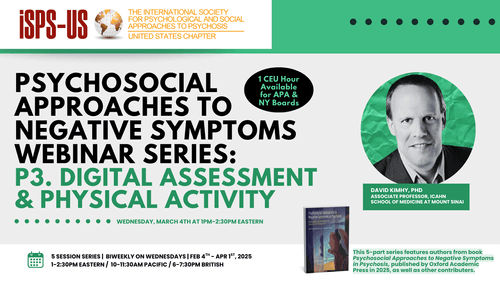
Part 1: David Kimhy, PhD - The Benefits of Physical Exercise on Negative Symptoms
Negative symptoms are highly prevalent among individuals with schizophrenia and related disorders and have been linked to sedentary behaviors and poor aerobic fitness, suggesting a potential target for treatment development. In this presentation, I will review the research literature on the various exercise interventions employed among individuals with schizophrenia and related disorders, along with issues related to their application and feasibility. Next, I will review some of the neurobiological benefits of physical exercise and their relevance to brain circuitry underlying negative symptoms (i.e., neural reward-related pathways). Drawing on recent research publications, I will provide a detailed review of the benefits of moderate-to-vigorous and none-to-low intensity physical exercise interventions in alleviating negative symptoms. Finally, I will provide practical recommendations for the employment of physical exercise interventions among individuals with schizophrenia and related disorders to target negative symptoms.Part 2: David Kimhy, PhD – Use of Digital Technologies in the Assessment of Negative Symptoms & The Benefits of Physical Exercise on Negative Symptoms
Negative symptoms are highly prevalent among individuals with schizophrenia and related disorders and have been linked to poor functioning and disability. Traditionally, these symptoms have been evaluated via in-person clinical interviews and observations. However, technological advances over the past 15 years have ushered the promise of employing digital technologies to enhance the assessment of negative symptoms. In this presentation, I will describe some of the challenges associated with traditional assessment methods of negative symptoms. Next, I will review emerging research on the use of digital technologies (e.g., actigraphy, smartphones, audio and video recordings of speech and facial expressions) in the assessment of negative symptoms. Finally, I will discuss future directions for research and clinical use in this area. -
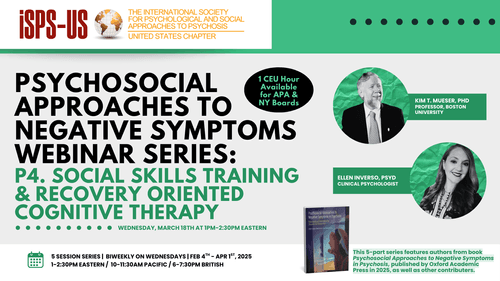
Part 1: Kim Mueser, PhD – Social Skills Training for Negative Symptoms
This presentation will begin with a definition of social skills, followed by the relationships between social skills, social functioning, and the negative symptoms of schizophrenia. The rudiments of social skills training (SST) for improving interpersonal skills will then be reviewed, followed by research on the effects of SST on improving social functioning and negative symptoms. Last, possible mechanisms through which SST may improve negative symptoms will be considered.Part 2: Ellen Inverso, PsyD – Recovery-Oriented Cognitive Therapy (CT-R)
This session will introduce the core principles of recovery-oriented cognitive therapy (CT-R), an evidence-based approach that is expressly formulated to address negative symptoms in the broader context of wellness and personal empowerment, even when effected individuals do not initiate “help” seeking or do not readily engage in treatment. CT-R employs Dr. Aaron T. Beck’s cognitive model to understand the whole person and outlines practical strategies and interventions that can be used in myriad treatment settings and be supported by multiple disciplines. This session will introduce the 5 steps of CT-R, including the concepts of the disconnected and adaptive modes, and will emphasize specific strategies for strengthening positive self-concept and building resilience. The Recovery Map will be introduced as a tool for developing a CT-R formulation and supporting recovery-oriented continuity of care. -
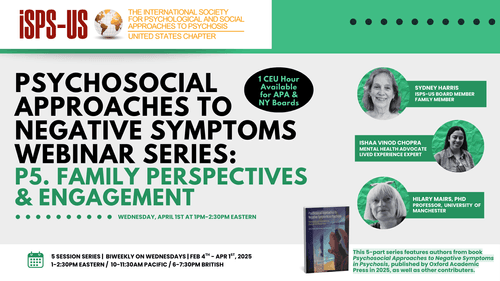
Part 1: Sydney Harris and Ishaa Vinod Chopra - Family Member Perspective
The format of this session will be a dialog, including questions and answers. The session will explore how we define “negative symptoms”, how they might be viewed by family members, and by their loved ones. People with negative symptoms may agree or have quite different perspectives. To complicate things, there can also be disagreement between family members, spouses, siblings, grandparents and extended family.No matter how we define negative symptoms, they are usually problematic for everyone. What exacerbates the negative symptoms and/or stress within the family? How do we cope? What works and what doesn’t? This varies from person to person, but there are also commonalities.
Part 2: Hilary Mairs, PhD – Working with Families to Improve Expressivity and Motivation
Recent approaches that embed family-based interventions into all aspects of mental health care appear to offer the most promise in reducing negative symptoms, particularly in the early stages of psychosis. This talk explores the background, theory and practice of working with families to support people with psychosis and limited emotional expression and activity. Strategies for mental health practitioners to engage carers in positive alliances and the structured psychosocial interventions distilled in these approaches will be highlighted.
Speaker Bios
-
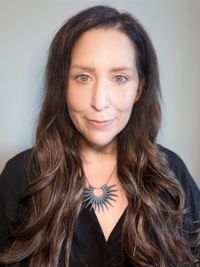 Jeannie Bass, CPS
Jeannie Bass, CPS, is a voice hearer and someone who lives with other extreme states. She is the Director of Peer Support Services at a public-sector psychiatric hospital in Massachusetts and an advocate and a leader in the Hearing Voices Movement. With over a decade of experience in peer support within clinical and public-sector psychiatric settings, she brings a meaning-centered, connection-focused, human-experience approach to psychosis. Jeannie is a Hearing Voices Network trainer and provides training and speaking for clinicians, attorneys, students, and people with lived experience. Her personal story and advocacy have been featured on NBC, and she serves on the HVN-USA Board of Directors. She is the co-author of the online Active Learning course Reframing Psychosis Spectrum Experiences, currently available, and the accompanying workbook, forthcoming from Cognella in early 2026. Jeannie’s work is grounded in social justice and the belief that voices, visions, and alternative ways of experiencing reality deserve dignity, curiosity, and relational safety within traditional mental health care and in our broader society.
-
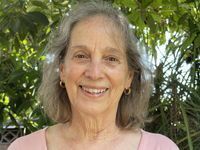 Sydney Harris, M.AmSAT
Sydney is the mother of an adult son who suffered from extreme states while he was in college. Initially, she naively thought that her son’s behavior - “negative symptoms” were related to delayed adolescence. It soon became apparent that much more was going on with him that she and her husband didn’t understand. They became frightened and frantically looked for answers. It has been over ten years since this journey began, and the family has cycled through many phases. They are still learning how to be together.
Sydney is sad that her son has suffered so much. However, his suffering encouraged her to look at herself, not just try to fix him. She has pursued this through psychoanalysis, the Maestricht Interview Training, reading, numerous classes and attending the Mad in America support group. Her life has been greatly enriched by these endeavors and helps her to stay open to what may be possible for her son.
She also hopes that by combining what she has learned with her professional experience, she has something unique to offer caregivers and their loved ones. She has been an Alexander Technique (AT) teacher, and an AT teacher-trainer for over 45 years. Sydney also serves on the board of ISPS-US.
-
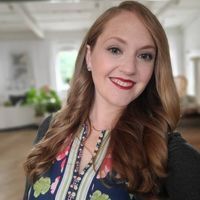 Ellen Inverso, PsyD
Ellen Inverso, PsyD, is a licensed psychologist and internationally recognized expert in recovery-oriented cognitive therapy (CT-R). For more than a decade, Dr. Inverso has played a pivotal role in the development and dissemination of CT-R. Her work has spanned therapeutic settings, having created transformative programming for psychiatric inpatient units, residential programs, schools, community teams, and outpatient practices. Her work has had a significant impact on diverse populations, including adolescents and young adults, individuals experiencing extreme forms of self-injury, those transitioning from institutional settings to community living, and families navigating mental health challenges. Dr. Inverso is co-author of the book Recovery-Oriented Cognitive Therapy for Serious Mental Health Conditions (2020), published by Guilford Press, alongside Dr. Aaron T. Beck and colleagues.
-
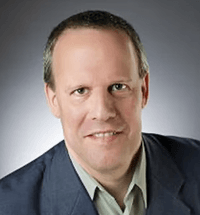 David Kimhy, PhD
Dr. David Kimhy is a clinical psychologist and a digital mental health entrepreneur with expertise in the development of cognitive and behavioral treatments for serious mental illness. He has more than 20 years' experience designing and leading randomized clinical trials focusing on the use of cognitive and behavioral interventions and technology-based approaches in the assessment and treatment of serious mental illness. This work resulted in more than 90 peer-reviewed research articles, book chapters, and books.
Most recently Dr. Kimhy served as an Associate Professor (tenured) at the Department of Psychiatry at the Icahn School of Medicine at Mount Sinai, the Director of the Experimental Psychopathology Laboratory, and the Program Leader for New Interventions in Schizophrenia. He pioneered the use of digital mobile health technologies in the study of psychosis, having published the first studies validating the use of digital phenotyping of patients with schizophrenia and its integration with wearable sensor technologies. His research has been funded by grants from the National Institute of Mental Health, the VA Administration, as well as private and institutional funding.
Dr. Kimhy is the founder and principal of Vital Psychological Therapeutics, the first national telehealth-based psychotherapy practice dedicated to the treatment of individuals with psychosis.
-
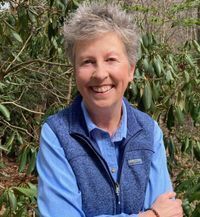 Ann Kring, PhD
Ann Kring received a BS in psychology from Ball State University and her MA and PhD in clinical psychology from the State University of New York at Stony Brook. She is currently Professor of the Graduate School and formerly Chair of Psychology and Director of Clinical Training at the University of California at Berkeley. Her research focused on emotion and psychopathology, with a specific interest in the emotional features of schizophrenia, including the negative symptoms and the linkage between social motivation and emotion. Kring and her group also worked to translate laboratory findings into effective assessment tools and psychosocial interventions for schizophrenia. Kring is past president of the Society for Research in Psychopathology and the Society for Affective Science, and a Fellow in the Association for Psychological Science, Society for Personality and Social Psychology, Society for Experimental Psychologists, and American Association for the Advancement of Science. She has co-authored 13 books and published over 125 scholarly papers in the top journals in the field.
-
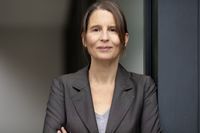 Tania Lincoln, PhD
Tania Lincoln studied Psychology in Marburg, Germany. She completed her PhD in 2003 at the Philipps-Universität Marburg and her training as a clinical psychologist in 2004. From 2003 to 2005 she worked in a psychiatric mental health setting where she became increasingly interested in psychological therapy for psychosis. From 2005 to 2011 she was the principal investigator in a randomized controlled trial on CBT for psychosis at the Philipps-Universität Marburg. Since 2011 she is professor for Clinical Psychology and Psychotherapy at the Universität Hamburg in the Faculty of Psychology and Movement Science, for which she was the Dean from 2018-2020. She is the director of the university outpatient mental health department and the scientific director of the therapist training program. Her research focuses on understanding the psychological mechanisms of psychotic symptoms and on improving interventions for psychosis and is reflected in numerous books and publications.
-
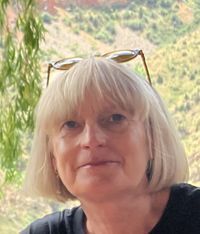 Hilary Mairs, PhD, DipCOT
Professor Hilary Mairs is an Occupational Therapist and currently the Head of Nursing, Midwifery and Social Work and Deputy Head of the School of Health Sciences at the University of Manchester. Her clinical experience, teaching and scholarship have focused on individual and family psychosocial interventions for psychosis. She has published several papers, a book (published in English and Italian) and facilitated workshops in Europe and the Far East relating to interventions to address the negative symptoms of psychosis. She has also worked with service user and carer networks to co-produce educational materials about hearing voices and reviews of specific educational strategies to enhance student and healthcare professional understanding of these experiences.
-
 Kim T. Mueser, PhD
Kim T. Mueser, Ph.D. is Professor of Occupational Therapy and Psychological and Brain Sciences, and Senior Researcher at the Center for Psychiatric Rehabilitation at Boston University. His research interests are on the development and evaluation of psychosocial interventions for schizophrenia and other serious mental illnesses, with a particular focus on improving social functioning. He has published numerous articles, books, and book chapters. He recently published: Mueser et al. (2024). Social Skills Training for Schizophrenia: A Step-by-Step Guide (Third ed.). New York: Guilford Press.
-
 Jens Roved
First and foremost, I am a voice hearer and psychosis survivor. I am a photographer, an occupational therapist, and father of two girls. I am educated at Lund University, Sweden and live in Copenhagen, Denmark. I worked previously as an occupational therapist at a palliative care unit in Malmö, Sweden and these days I teach occupational safety and preventive health care for work space at production schools.
-
 Ishaa Vinod Chopra
Ishaa is a Guelph MSc. Candidate in Critical Family and Kinship Studies with an Interdisciplinary focus on Gender, Sexualities and Bodies at the University of Guelph, Canada. She has a Diploma and Honours Degree in Early Childhood Education from George Brown College. A BFA in Indian Classical dance of Kathak; she was trained under Guru Pta. Maneesha Sathe and now Prajakta Dravid- founder of Kathak school- Ātmikā in Toronto.
'Finding Order in Disorder', her deeply personal memoir, explores intersectional themes of lived experiences in mental well-being and being a survivor of intimate partner violence through the medium of expressive arts such as dance therapy, mad poetry, visual arts, and journaling. She has led dance workshops through community arts engagement at Toronto Neighbourhood Organization- TNO, George Brown Polytechnic and Workman Arts programming at Meridian Arts Centre.
An artist-scholar, her multidisciplinary art is featured in a York University thesis film ‘Unfinished’ screened at Workman Arts Organization's Rendezvous with Madness, Stella’s Place Mental Health film festivals. Her work has been disseminated at academic conferences such as Children’s Mental Health Ontario - CMHO , International Society of Psychosocial Approaches to Mental Health- ISPS-US, Digital Mental Health International Collaborative- eMHIC and Council of Exceptional Children - CEC.
Her writing, inspired by her Supervisor, Dr. Adam W.J. Davies, has appeared in AECEO’s eceLINK journal. She is the CEO and Founder Finding Order in Disorder Foundation Non-Profit & Arts Collective that seeks to explore projects such as hybrid podcasts, therapeutic dance and community engagement for mental wellness.
